
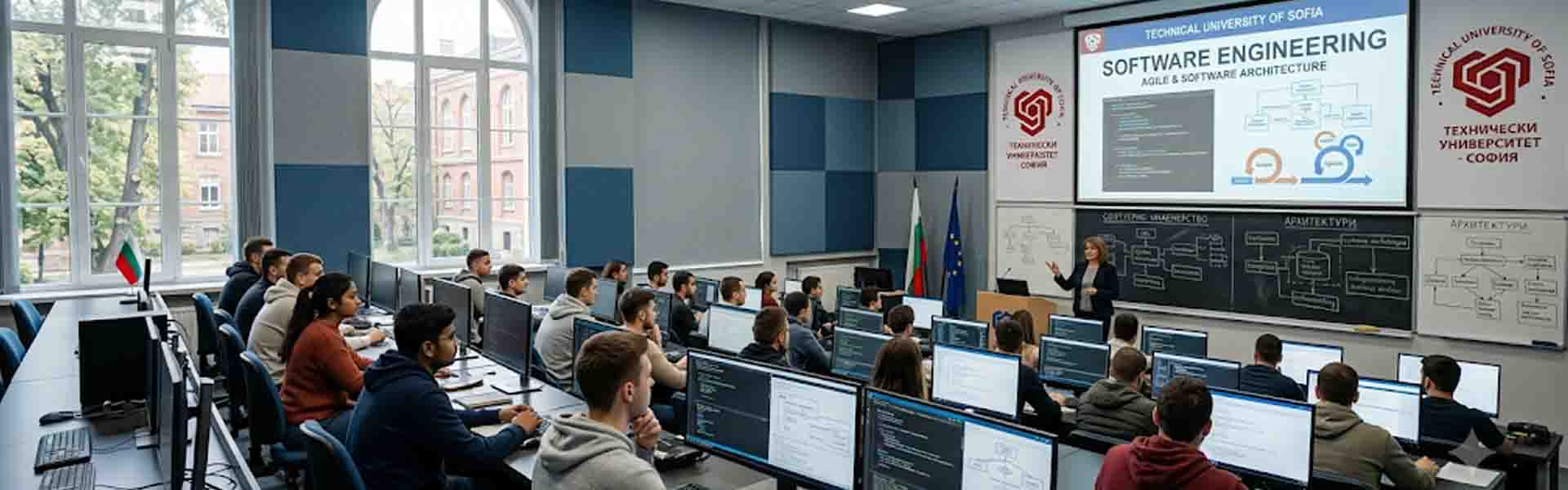
Study Software Engineering in Bulgaria
Today, software engineering in Bulgaria has become one of the most active and strongest fields in the technology sector. Bulgaria is known for its high quality education at a manageable fee, which can give you a chance to experience European education abroad without any heavy financial burden. You can explore a wide range of software engineering courses in Bulgaria covering areas such as programming, systems design, software architecture and product development.
Several universities also offer English taught programs in Bulgaria while providing flexibility for every Indian student. Bulgaria continues developing newer areas such as semiconductors and quantum technologies, creating more interest in technology-related education and careers. A software engineering degree in Bulgaria can help you build a strong foundation in coding and systems thinking while gaining genuine international exposure.
This guide will walk you through everything important about software engineering studies in Bulgaria including eligibility, top universities, fees, admission process, visa requirements, scholarships and career opportunities.
Ready to explore more about software engineering in Bulgaria? Continue to read ahead.
Quick overview: Study Software Engineering in Bulgaria
| Key information | Details |
| Degree | Bachelor’s and Master’s |
| Duration | 4 years for Bachelor’s and 1 to 1.5 years for Master’s |
| Language | English and Bulgarian |
| Popular universities | Technical University of Sofia, Sofia University, New Bulgarian University |
| Average tuition fee | Around €3,000 to €4,000 per year |
| Student Visa | Type D visa and residence permit for eligible non-EU students |
Why Study Software Engineering in Bulgaria?
If you have your eyes set on software engineering in Bulgaria then you must understand the reasons behind it before you make your final choice.
- Affordable fees: A software engineering degree in Bulgaria is highly affordable as compared with a country like the UK, US or Australia. It gives you a chance to experience European education at such a reasonable fee without compromising the quality. The cost to study in Bulgaria for Indian students is manageable enough that most middle class families can plan around it comfortably.
- English medium programs: If you are still wondering about the language barrier then you can explore English taught programs in Bulgaria. This also gives you the flexibility to choose the software engineering course in Bulgaria that suits you the best without worrying about Bulgarian language.
- Recognized degree across Europe: Bulgaria follows the European Credit Transfer and Accumulation System, so your software engineering studies in Bulgaria hold value across the EU. This helps you a lot if you plan to go for a masters in Bulgaria or work somewhere else in Europe later.
- Growing technology sector: Bulgaria’s IT industry has kept growing steadily with opening new jobs especially in coding, systems design and product development. It also allows students to explore live projects and internships during their software engineering course in Bulgaria.
- A student friendly environment: Bulgaria attracts thousands of Indian students every year mainly because of the manageable fees, European exposure and a student friendly environment that can make your journey easy and comfortable.
- Support from scholarships: Several scholarships in Bulgaria for international students are available across universities, and this can bring down your tuition fees in Bulgaria by a good margin if you qualify based on your academic record.
If you compare Bulgaria with other countries, it still stands as one of the best countries to study software engineering for Indian students who want quality education without a heavy fee structure. Bulgaria continues to hold its ground even against other popular choices for software engineering courses abroad.
Software Engineering Courses in Bulgaria
Bulgaria gives you two clear paths to build your career in software engineering such as:
Bachelor’s in Software Engineering in Bulgaria:
If you have just finished Class 12 and want to start your software engineering degree in Bulgaria right away, a bachelor’s route is best for you. The course will help you build your base in programming languages, data structures, systems design, mathematics and databases. Most of the universities also offer English taught programs in Bulgaria, so you rarely face any language trouble at this stage.
Master’s in Software Engineering in Bulgaria:
If you already hold a related bachelor’s degree and want to sharpen your expertise further, you can start a master’s degree in Bulgaria. It will let you dive into advanced areas such as software architecture, cloud computing, cybersecurity, distributed systems and applied research projects. It can also open doors to specialised roles once you complete your software engineering studies in Bulgaria.
Confused about which route fits your background the best? We are just a message away to help you decide.
Eligibility Criteria for Software Engineering in Bulgaria
While the specific software engineering eligibility in Bulgaria may vary among universities, there are some common requirements for international students applying for this program. Have a look at the following eligibility criteria that should be fulfilled by you before applying for a software engineering degree in Bulgaria:
- Educational Requirement: It requires a bachelor’s degree diploma of at least 240 credit points and a minimum average mark between 50-75%, depending on the university and course.
- English Proficiency Requirement: A candidate should know English on an average upper-advanced level. However, it is an option if the bachelor’s degree is not in English and varies depending on the university and course. Candidates can prove their proficiency in the language through the following tests:
- Overall band score 6.5 or IELTS Academic
- ESOL International (CAE and CPE grades).
- English language proficiency is measured by a minimum score of 80 on TOEFL CBT (computer-based test)
- A minimum score of 550 in TOEFL PBT (paper-based test).
- at least 60 PTE Academic.
- Entrance Test Requirement: A few universities may also test your logical reasoning or core mathematics knowledge through a short entrance assessment, especially for technical software engineering course eligibility in Bulgaria.
- Application requirement: Along with your academic and language proof, you need to submit a completed application form including your passport copy and any additional documents requested as part of the software engineering application process Bulgaria.
Want to check your eligibility? Our team is here to guide you at every step!
Language Requirements for Software Engineering in Bulgaria
English is the medium of instruction in Bulgarian universities for most English taught programs in Bulgaria. The purpose of these programmes is aimed at foreigners and is conducted in English for them because non-Bulgarians can also take part. This presents a golden opportunity for those who plan to pursue their software engineering studies in Bulgaria without learning the local language.
Software Engineering Admission Deadlines in Bulgaria
In most Bulgarian universities with a programme in software engineering in Bulgaria, there is only one admission period per year, and the submission of documents usually takes place from early summer until the fall season. The last date to apply is usually in December. It is recommended for international students to refer to the specific admission procedure in Bulgaria and deadline dates set by their chosen institutions.
This Bulgaria university application process happens on a rolling basis so it is better to apply early rather than waiting until the final weeks before the deadline.
Documents Required for Software Engineering Admission in Bulgaria
When applying for an MS in software engineering in Bulgaria, you will typically need the following documents:
- Filled form of university application
- High school diploma or equivalent
- Transcripts of your academic records
- A proof of English language proficiency
- Passport or identification documents
- Letters of recommendation, if required
- Personal statement or statement of purpose
- Any other university-specific documents necessary upon admission into your chosen school.
Not sure if your documents are in order? We can review your checklist before you apply.
Software Engineering Course Duration in Bulgaria
As with any other engineering programme in Bulgaria, the average duration for a software engineering course in Bulgaria is four years. Students spend 1-1.5 years in such colleges where they get a thorough education that furnishes them with the tools and ideas related to a thriving engineering practice.
Software Engineering Fees in Bulgaria
The Tuition fees in Bulgaria vary greatly depending on the university, specific program, and whether one is an EU or non-EU citizen. In general, an international student may have to pay an annual tuition fee of somewhere between €1,000 to €4,000 on average for most institutions in the Netherlands concerning the specific course they are pursuing.
| Name of the University | Fee structure per year |
| Sofia University “St. Kliment Ohridski” | €3,300 per year |
| Technical University of Sofia | €3,000 to €4,000 per year. |
| Technical University of Varna | €3,000 per year |
| New Bulgarian University | Around €2,556 to €3,220 per year. |
| Plovdiv University “Paisii Hilendarski” | €3,000 per year |
The software engineering fees in Bulgaria can be planned according to the university and level of study. The figures above are based on the latest available official university fee information for international students.
Top Software Engineering Universities in Bulgaria
As such, some of the prominent universities in Bulgaria offer software engineering universities in Bulgaria programmes. Some of the popular options include:
| Name of the University | Category | City |
| Technical University of Sofia | Public | Sofia |
| Sofia University “St. Kliment Ohridski” | Public | Sofia |
| New Bulgarian University | Private | Sofia |
| Technical University of Varna | Public | Varna |
| Plovdiv University “Paisii Hilendarski” | Public | Plovdiv |
There is no single best software engineering university in Bulgaria for every student, as every institution has its own strengths in course depth, research exposure and campus environment.
Confused about which one fits your goals best? We can help you compare and shortlist the right one.
Scholarships for Software Engineering in Bulgaria
There are several scholarships in Bulgaria for international students that you must consider before finalising a budget:
- University specific scholarships: Some Top universities in Bulgaria provide their own scholarships based on academic performance and specific student categories. Before you apply for any software engineering course in Bulgaria, it is important to check the official scholarship page of your shortlisted university alongside its admission requirements.
- Erasmus+ opportunities: Students already enrolled at eligible universities can apply for Erasmus+ funding during their software engineering studies in Bulgaria. This can help you reduce your costs during an exchange term or a short mobility period within Europe.
- Merit based awards: A strong academic performance can open doors to merit based scholarships. This can bring down your software engineering course fee in Bulgaria by a meaningful margin.
- Government and institutional support: Bulgaria’s Ministry of Education and Science occasionally extends scholarship opportunities to international students pursuing higher education in Bulgaria though the terms and availability keep changing from year to year, so it is always necessary to stay updated closer to your intake.
Therefore, every scholarship comes with its own eligibility rules so always check the latest terms directly with your chosen university while you plan your tuition fees in Bulgaria.
Still figuring out which scholarship fits your profile? We can break it down for you in one simple conversation.
Software Engineering Admission Procedure in Bulgaria
Students have to follow the given software engineering admission procedure in Bulgaria to get admission at their preferred institutes to pursue software engineering courses:
- Programme assessment: Working with experienced specialists, we will assess the specificity of programmes and institutions to which you intend to apply, such as their qualification requirements, needed documents and the necessary exams for admission.
- Application support: Talk to us when you need to apply for the programme and fill out the software engineering application process in Bulgaria forms correctly.
- Document collection: Our support team will help you collect all important documents like your high school transcript, eligibility and equivalence certificate, passport and other university-specific documents.
- Entrance test: Some universities might require you to take a university-sponsored entrance test, or ask you to provide evidence of eligibility through a government-funded national-level exam. They may even want you to attend an interview, and our guidance advisors offer help in preparation for the same.
- Language proficiency support: We also guide you through various language proficiency exams, since some universities might expect a candidate to undergo an English entry exam or present overseas academic records demonstrating language competence.
- Final admission steps: If your admission is successful after reviewing your form and performance in the admissions examinations, we shall help you complete the rest of the procedures through which you join the university of your choice as part of your software engineering admission in Bulgaria journey.
- Confirmation: An email accepting the admission will be forwarded to you by the institution if selected and we will help you with all aspects that follow, ranging from finding accommodation to your visa.
Bulgaria Student Visa for Software Engineering Students
Once your admission is confirmed, international students generally need a Bulgaria student visa for software engineering along with a residence permit for the duration of their course. The main documents include:
- A university admission or acceptance letter
- A valid passport
- A proof of accommodation in Bulgaria
- Health insurance
- A proof of sufficient funds to support your stay
- Recent passport-size photographs
- A completed visa application form
The visa process is handled through the Bulgarian embassy or consulate in your home country and the residence permit formalities continue once you land in Bulgaria. Therefore, the Bulgaria student visa requirements for Indian students can be different depending on your home city, so always confirm the current checklist before you apply.
Still unsure about your visa checklist? Our team can walk you through each document before you apply.
Career Opportunities After Software Engineering in Bulgaria
A software engineering degree in Bulgaria opens doors across several fast-growing career paths within Bulgaria and across foreign countries. Here are some popular careers students usually head toward after their software engineering course in Bulgaria:
- Software Developer
- Full Stack Engineer
- Systems Engineer
- DevOps Engineer
- Mobile App Developer
- Quality Assurance Engineer
After completing your software engineering studies in Bulgaria, you can explore different roles locally, in the wider European market or even back home in India.
Things to Know Before Choosing a Software Engineering Course in Bulgaria
Before you finalise your software engineering course in Bulgaria, here are some important checklists you must consider:
- Course structure: Compare the subjects covered under each software engineering degree in Bulgaria and match this with your own interest before you shortlist.
- Admission requirements: Confirm the exact software engineering admission requirements of your shortlisted university, including the minimum marks expected in Mathematics and Physics at the qualifying level.
- English language cutoff: If you are looking for English taught programs in Bulgaria, check that the programme runs fully in English and confirm the IELTS or TOEFL score it expects from international applicants.
- University recognition: Look into the accreditation of your shortlisted software engineering schools in Bulgaria for international students and check if the degree holds relevance for your future career or further studies in India.
- Visa requirements: Always check the latest Bulgaria student visa requirements for Indian students early, as the document formalities can take time.
- Scholarship eligibility: Check all the scholarships available that you may qualify at your shortlisted university. This can bring down your software engineering course fee in Bulgaria significantly.
- Entrance exam: Some universities may choose students only on academic marks, while others conduct an entrance test or interview, so confirm this as part of your admission procedure in Bulgaria.
Related Courses
A software engineering degree in Bulgaria is an ideal choice for those who prefer affordable fees, English-taught programmes and a wide growing technology sector. Whether you choose the bachelor’s or master’s route, this guide has walked you through everything you need to know before applying for a Bulgarian university application form.
Frequently Asked Questions
A software engineer in Bulgaria can earn well with a monthly salary generally starting around BGN 4,800 and this can grow steadily as you gain experience.
You generally need Class 12 with good marks in Mathematics, and you also need to show proof of English proficiency if your chosen programme is taught in English.
Most universities do ask for IELTS or a similar certificate like TOEFL, though some also let you clear their own English test instead.
You can get to study subjects like programming, software design, databases, algorithms and system architecture, along with electives such as cloud computing or mobile app development.
Yes, both tuition fees and the cost of living in Bulgaria is considerably lower than most Western European study destinations.
Yes, you can take up part-time work alongside your course, as long as it fits within the rules that apply to your student visa.
Yes, many graduates work remotely for international companies, subject to the applicable work and residence rules of their location.
The terms are often used interchangeably by universities, though the exact course content can vary, so check the syllabus of your shortlisted programme.
Last Updated: October 16, 2026