
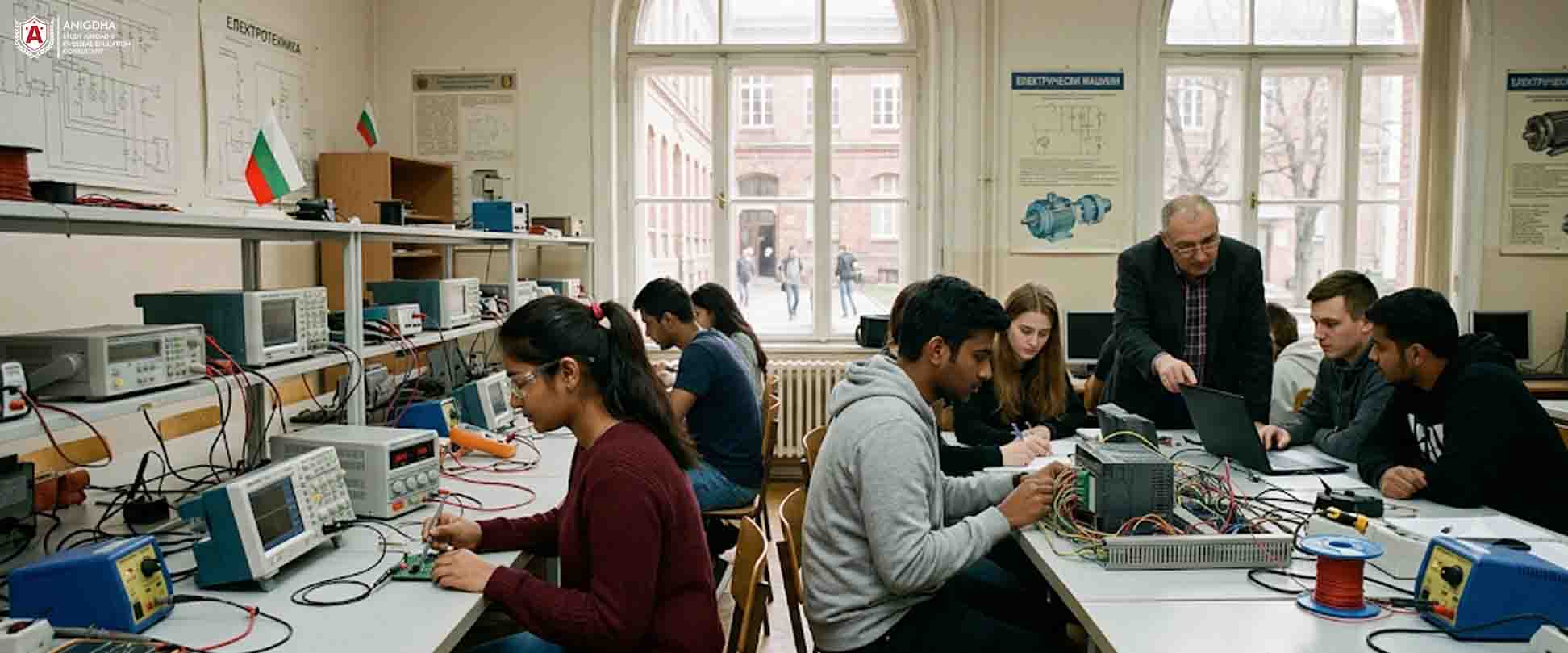
Study Electrical Engineering in Bulgaria for Indian Students
Do you dream of building a career in electrical engineering? Bulgaria can be an ideal choice for you to study electrical engineering in Bulgaria. The universities in Bulgaria offer student development by ensuring qualitative service. Bulgaria University is better known for its Electrical Engineering course in Bulgaria, which has relevance worldwide.
This course is available at various Bulgarian universities that are accredited by the European University Association. Bulgaria has a landmark history in education that will help you advance your career in electrical engineering, electronics, and automation. However, studying your desired course in Bulgaria is beneficial for you because Bulgaria is strategically located and assures qualitative education with a low cost of living as compared to other countries.
If you have been exploring electrical engineering in Bulgaria for Indian students, this guide covers everything you need to plan your journey properly. In this guide, we are going to include the top universities, fees, eligibility, admission process, scholarships, work rules and career opportunities after your degree.
Ready to explore your journey to study electrical engineering in Bulgaria? Read on to know more about the opportunities it can offer.
Electrical Engineering in Bulgaria: Quick Overview
Before you go deeper into the process, here is a quick snapshot of everything you need to know about electrical engineering in Bulgaria:
| Particulars | Details |
| Popular Intakes | Autumn (October) and Spring (limited, February) |
| Degree Levels | Bachelor’s, Master’s and PhD |
| Course Duration | Bachelor’s is 4 years while Master’s is 1 to 2 years |
| Medium of Instruction | English and Bulgarian |
| Public University Fees | Around €2,500 to €4,000 per year |
| Cost of Living | Around €500 to €700 per month |
| Popular Universities | Technical University of Sofia, Technical University of Varna |
Why Study Electrical Engineering in Bulgaria?
If you have chosen to study electrical engineering in Bulgaria as your next destination, then you must look at its benefits:
- Low tuition fee: Public universities in Bulgaria charge a reasonable fee around €3,000 to €4,730 per year. This makes your electrical engineering fees in Bulgaria far more affordable than in Western Europe.
- English-taught programmes: If you are concerned about the language barrier, you can explain several english taught programs in Bulgaria. This means you don’t need to learn Bulgarian to complete your course.
- Recognised universities: Bulgaria is home to well recognised institutions like the Technical University of Sofia. It is considered as one of the leading electrical engineering universities in Bulgaria for international students.
- No entrance exam: If you hold a recognised English proficiency certificate, you can skip the entrance exam at several universities. This makes your application process simpler and easy.
- EU-recognised degree: A Bulgarian degree is accredited by EU partner universities, so you can work or pursue further studies in any EU country after graduation.
- Low cost of living: Bulgaria keeps your monthly expenses lower than most Western European countries. This helps you manage your overall cost of studying electrical engineering in Bulgaria.
- European education: Students pursuing an electrical engineering degree in Bulgaria can experience the European education system while gaining international academic exposure.
Eligibility to Study Electrical Engineering in Bulgaria
These are the criteria that students must follow to secure admission to the electrical engineering course in Bulgaria:
- Students need to obtain a minimum of 62% in high school to pursue their UG program.
- The majority of universities conduct entrance examinations to provide electrical engineering admission in Bulgaria.
- In major universities, language proficiency certification is a criterion for getting admission to this program. Students should have proficiency in English or Bulgarian, like:
- PTE Academic: minimum 60 score
- TOEFL CBT (computer-based test): minimum 80 score
- TOEFL PBT (paper-based test): minimum 550 score
- IELTS: 6.5 Bands
- ESOL International (CPE 180–199, CAE score of 190, FCE score of 180–190) or higher
Not sure if you meet the eligibility for electrical engineering universities in Bulgaria? Our team can review your profile before you apply.
English Language Requirements for Electrical Engineering
The language of instruction to study electrical engineering in Bulgaria is usually English. Hence, applicants are advised to submit proof of qualifying English Proficiency Exams like IELTS and TOEFL when applying for English taught programs in Bulgaria.
Documents Required to Study Electrical Engineering in Bulgaria
These are the list of documents required to study electrical engineering in Bulgaria that students need to submit to get admission to the Electrical Engineering program:
- Passport-size photo
- 10th and 12th-grade mark sheets
- Migration certificate
- University application form
- A declaration letter
- Affidavit certificate
- Passport
- Equivalence certificate issued by any of the Bulgarian Regional Departments of Education.
- English proficiency certificate or proof of your preparatory course if you cannot submit one.
- Bank statement as a proof of financial status for your stay in Bulgaria.
- A medical certificate confirming you are fit to study.
Electrical Engineering Intake and Admission Deadlines in Bulgaria
Bulgaria has one main intake for electrical engineering admission in Bulgaria. The applications usually open around April and stay open until September, depending on your university. This intake supports the Electrical Engineering program at most universities. The application deadline at most technical universities is usually around late September, so you need to submit your documents well before this date.
Electrical Engineering Fees in Bulgaria 2026–27
The tuition fees in Bulgaria may change each academic year, so students should always check the latest fee structure of their chosen university. Here is the idea of electrical engineering course fee in Bulgaria:
| Name of the University | Fees per year |
| Technical University of Sofia | 3,000 to 4,000 EUR Per Year |
| Technical University of Varna | 2,000 EUR Per Year |
| Technical University of Gabrovo | 2,500 EUR Per Year |
| Trakia University | 1,000 to 1,500 EUR Per Year |
| New Bulgarian University | 3,000 EUR Per Year |
Other Costs to Consider While Studying Electrical Engineering in Bulgaria
Apart from your electrical engineering fees in Bulgaria, you need to manage several other expenses separately. Here are some common costs you have to prepare for in advance:
- Accommodation: A university dormitory usually costs around €100 to €200 per month while private rent is around €200 to €400 per month.
- Food and daily expenses: Groceries and meals usually cost around €150 to €250 per month. This is a separate expense from your university fee.
- Health insurance: You need travel medical insurance of at least €30,000 coverage for your visa, which usually costs around €50 to €100 per year.
- Visa and residence permit costs: A Bulgaria student visa (Type D) usually costs around €100 along with a small fee for your residence permit once you arrive.
- Travel expenses: A one-way flight from India to Bulgaria usually costs around €300 to €500 depending on the season.
- Study materials: Books, stationery and equipment usually cost around €50 to €100 per semester.
- Document legalisation: Translation, notarisation and legalisation of your documents usually cost around €50 to €100 in total.
All these expenses together will add to your overall cost of studying electrical engineering in Bulgaria, so this gives you a complete idea of your budget.
Top Universities to Study Electrical Engineering in Bulgaria
Bulgaria is famous for having the most popular universities for this program. You can find the top electrical engineering universities in Bulgaria across public and private institutions.
| Name of the University | Category | Location |
| Technical University of Sofia | Public | Sofia |
| Technical University of Varna | Public | Varna |
| Technical University of Gabrovo | Public | Gabrovo |
| Trakia University | Public | Stara Zagora |
| New Bulgarian University | Private | Sofia |
Electrical Engineering Admission Process in Bulgaria
Students need to follow these admission procedures to get electrical engineering admission in Bulgaria:
- It is necessary for students to seek guidance while applying for a joint degree program from a Bulgarian university. Our specialized team members can help students resolve their doubts related to admission.
- We always assist students in choosing electrical engineering universities in Bulgaria as per the suitability of their programs.
- Students will get a confirmation call soon after making the payment for the course.
- Our experts assist students in processing their Bulgaria student visa and passport applications.
- We also provide other services to students, like preparing them for proficiency tests, and interviews.
- We assist students in arranging accommodation fees and foreign exchange as well.
Ready to begin your electrical engineering admission in Bulgaria? We will guide you through every step.
Can International Students Work While Studying Electrical Engineering in Bulgaria?
Yes, it is possible. If you study electrical engineering in Bulgaria, you can work part-time without a separate work permit. In this case, your employer only needs to register you with the Employment Agency within 7 days of your start date.
You can work up to 20 hours per week during the academic year, and full-time during official university holidays. After you finish your degree, you get 9 months to look for a job, and you need to apply for a work permit if you wish to continue working in Bulgaria. Here are some part-time jobs in Bulgaria you can consider:
- Electrical or maintenance assistant role in a company office.
- Customer support role in English at a service company.
- Office or administrative assistant role.
- Work as a tutor in your strong subjects like mathematics or physics.
However, a part-time job can help you manage your cost of studying in Bulgaria and build early experience for your engineering career.
Planning to earn while you learn in Bulgaria? Connect with us for the right details.
Scholarships available to study electrical engineering in Bulgaria
If you plan to study electrical engineering in Bulgaria, you can look at a few scholarship options to reduce your costs. Students usually pay the full tuition fee, so a scholarship can ease your budget. Here are the scholarships in Bulgaria for international students you can consider:
- Bulgarian Government Scholarship: The Ministry of Education and Science offers this scholarship to students admitted under agreements between Bulgaria and their country but you need to confirm the current eligibility for Indian students with your university.
- Erasmus+: This programme funds one or two semesters at a Bulgarian university. However, seats are always limited, so you need to check availability once you are enrolled.
- University merit scholarships: Some universities in Bulgaria give a fee discount to students with good academic results. However, you need to check with your university whether this applies to your programme.
Each scholarship has its own application period, so you need to check early before applying for the Bulgarian university application form.
Career Scope After Electrical Engineering in Bulgaria
After you complete your electrical engineering degree in Bulgaria, you can get to explore several career opportunities. Your degree is recognised across the EU, so you can apply anywhere in the world. You can explore the following roles across manufacturing, energy, construction and telecom companies in Bulgaria and Europe:
- Electrical design engineer
- Power systems engineer
- Control and automation engineer
- Maintenance engineer
If you want to continue your studies, you can pursue a master course in Bulgaria in a specialised engineering field. However, your degree from electrical engineering universities in Bulgaria gives you the freedom to plan your career path anywhere in the world.
Things Indian Students Should Check Before Choosing Electrical Engineering in Bulgaria
Before you finalise your decision to study electrical engineering in Bulgaria, here are some important checklists you must consider:
- Always compare the subjects covered under each electrical engineering course in Bulgaria and see if they match your own interest. This can let you choose an ideal course.
- Always confirm the language of instruction at your shortlisted university. This can let you know if you need a preparatory course before your degree begins.
- Always check the eligibility and entrance exam requirements of your shortlisted electrical engineering university in Bulgaria well before the deadline. This can let you avoid last-minute stress during your application.
- Always confirm that your chosen university holds proper accreditation. This can let your degree stay valued and recognised across Europe and in India.
- Always compare the electrical engineering fees in Bulgaria along with your expected cost of living. This can let you plan your full budget accurately.
- Always review the latest Bulgaria student visa requirements early. This can help you avoid delays in your document formalities and appointment slots.
Related Courses
If you want a recognised European engineering degree within a manageable budget, Bulgaria is a suitable choice. If you plan to study electrical engineering in Bulgaria, you can begin your career with a strong foundation and continue it anywhere in Europe.
Ready to begin your journey? Our team is happy to guide you throughout this journey. You can book a free consultation anytime.
Frequently Asked Questions
Yes, Bulgaria offers low tuition fees and well recognised technical universities. You can also find English-taught programmes, so you can study without learning Bulgarian.
A bachelor’s programme usually takes 4 years, and a master’s programme usually takes 1 to 2 years.
You need to complete Class 12 with a minimum of 62% marks, along with relevant subjects like Mathematics and Physics. Some universities also ask for an entrance test in Maths and English.
Yes, the degree is recognised across the European Union and by international accreditation bodies. You need to include it in the Association of Indian Universities equivalence list for full recognition in India.
Yes, you get 9 months after your degree to look for a job. You need to apply for a work permit if you wish to continue working in Bulgaria.
You can earn 4007 EUR on a monthly basis after pursuing this desirable course in Bulgaria.
You must have a good command of English while studying in Bulgaria. Changes in your environment and food habits can be a challenge for you.
Last Updated: October 16, 2026